
Finding Grand Blanc Township Residents
Grand Blanc Township has no single public roster of every household. The useful route depends on the question. A property search connects an owner or customer name to a parcel. A voter record can show a registration tied to an address, subject to Michigan's confidential-field rules. A recorded deed identifies document parties and a legal description. Older city directories, yearbooks, obituaries, and census material add historical household clues. Each record should be read for what it actually proves, rather than treated as a complete list of people at one address.
Begin with an exact name, street address, or old address. Keep the date with every result. Grand Blanc Township is distinct from the City of Grand Blanc, and a Grand Blanc mailing label or ZIP alone does not settle that question. The county parcel tools and township boundary layers are the best early check when a result could sit outside the township.
- Use the BS&A Grand Blanc Township property search with an address, owner name, or parcel number.
- Record the situs address, owner or customer spelling, and parcel identifier before moving to another system.
- Use the Genesee Parcel History viewer to compare the map, ownership history, and deed references.
- For a registration question, use the Michigan Voter Information Center or make a focused Qualified Voter File request.
- For an older household, search the Flint-area directory and local-history collections, then verify the lead against a deed, census, or custodian record.
Note: An owner, document party, or registered voter is not automatically every person who lives at a Grand Blanc Township address.
Grand Blanc Township Records Offices
The township, Genesee County, and Michigan each hold a different part of the resident record trail. Grand Blanc Township routes address-based research through Assessing, Building, Planning, GIS, and its clerk and FOIA functions. Genesee County combines the Clerk and Register of Deeds structure, while the state provides voter, court, and vital-record systems. For a whole-road approach, the detailed parcel sequence belongs on the Grand Blanc Township by-street directory.
Genesee County Register of Deeds
324 S. Saginaw Street, Suite 1A
Flint, MI 48502
810-257-3060
Grand Blanc Township Assessing
5371 South Saginaw Road
Grand Blanc, MI 48507
810-424-2600
Genesee County Elections
324 S. Saginaw Street, Suite 1A
Flint, MI 48502
810-257-3283
County sources list a second Register of Deeds address elsewhere, so call the office before making an in-person trip. The current county Clerk page gives the combined desk at 324 South Saginaw Street, and it lists Monday through Friday hours of 8 a.m. to 4 p.m.
Grand Blanc Township Parcel Searches
The township's BS&A portal offers Address, Name, and Parcel Number search modes. Its property trail can connect a current address to a customer or owner label, account number, property, tax, building, sale, special-assessment, utility, and related collections. Treat the site as a reference tool. Its own notice directs users to the municipality when a record needs correction.
| BS&A field | Useful result | Careful reading |
|---|---|---|
| Address | Situs or physical parcel address | Historic sources may format or spell it differently. |
| Name | Owner or customer index entry | Preserve initials and conjunctions; it is not an occupant list. |
| Parcel number | PID and account bridge | Use the full identifier across mapping and deed work. |
| Sale search | Date, price, grantor, grantee, and class filters | A sale documents a transaction, not continuous residence. |
The basic search is free. The inspected detailed parcel screen offered access through an owner claim or a $6.95 option. That is a useful local access distinction: a result can identify a parcel even when every detailed field is not available without an account.
Grand Blanc Township Boundary Checks
Postal geography can mislead a residents directory search. The township FAQ explains that ZIP codes 48439 and 48507, as well as school-district lines, can include other municipalities. A Flint mailing label can still point to the township, and a Grand Blanc label can point elsewhere. Turn on the municipal-boundary, ZIP-boundary, roads, and ownership-parcel layers in the township GIS before using a postal label as a location conclusion.
The township's layer catalog also includes subdivisions, zoning, flood and wetland context, school districts, and aerial imagery from 1999, 2001, 2004, 2006, 2009, and spring 2018. Those layers help place a parcel in its setting. They do not identify a household. The Grand Blanc Township ZIP directory separates delivery ZIP questions from tax and township jurisdiction.
- Parcel
- A mapped unit of land used by the assessor and tax system.
- PID
- The parcel identifier that ties a property record to maps and deed research.
- Situs address
- The physical property address, which can differ from a tax mailing address.
- Criss-cross directory
- A historical directory section arranged by street and house number rather than surname.
Grand Blanc Township Voter Records
Michigan's Qualified Voter File is maintained by the Department of State and local clerks. The public-facing Michigan Voter Information Center is the individual lookup route. A fuller request can be scoped to one jurisdiction, county, district, school area, village, or ward and precinct. Michigan does not have party registration, and a voter record can show registration or participation history, not ballot choices.
Public voter information has important exclusions. Driver or state ID numbers, month and day of birth, phone numbers, email, signatures, last four Social Security digits, and related fields are withheld. A dated registration match is not a census of a property. It will not show every adult, children, unregistered people, or someone using a protected address.
Note: Describe a voter match as registered at an address on the lookup or list date, not as proof of current residence.
Grand Blanc Township Current Directory Sources
Current Grand Blanc Township resident sources are really separate record types. A property roll answers an ownership question. A deed index records parties to land documents. A voter file addresses registration. Court and vital records have narrower legal purposes. Selecting the source first avoids overclaiming a match.
| Record source | What it can show | Custodian | Access path |
|---|---|---|---|
| BS&A property records | Parcel, owner/customer, current tax and building categories | Grand Blanc Township | Free basic portal; some detail gated |
| Parcel History | Map, tax-map relationship, ownership history, deed references | Genesee County | Public informational viewer |
| Qualified Voter File | Publicly available registration data under field limits | Michigan and local clerks | MVIC or focused FOIA request |
| Register of Deeds index | Grantor, grantee, instrument and legal-description trail | Genesee County | Online search, subscription, or counter |
| Chamber organization directory | Public organization contacts | Grand Blanc Chamber | Public category directory, not a household roll |
When the goal is one person rather than a parcel, use the Grand Blanc Township resident lookup workflow to compare independent, lawful records instead of treating one indexed name as a final answer.
Genesee Deeds for Grand Blanc Township
The Genesee County Register of Deeds records deeds, mortgages, liens, plats, and other real-estate instruments. A recorded party name is useful because it comes with a legal description and recording context. It does not say who occupied the property after the document was filed. Start with a current PID and the exact owner spelling, then check the legal description at each step.
The official historical-index guide uses year and letter books. Its document types include DE for combined deed grantor and grantee work, DEGR for grantor, DEGE for grantee, and MTG for mortgage parties. The guide shows an image and Go-To Page workflow, but it does not state one complete online start year or cutoff. When the needed book is absent, the alternatives are the Register counter, archive or microfilm research, and a narrow request for an identified record.
Grand Blanc Township Court and Vital Trails
The MiCOURT case search is the state starting point for a party or case number, with local files held by the 67th District Court, 7th Judicial Circuit Court, and Probate Court. A party name in a court index is not a present-address confirmation. Sealed, juvenile, expunged, and protected matters may not be public. For a file that does not appear online, contact the court records desk with a case number or specific request.
Vital records follow different rules. The Genesee County Clerk handles local birth, death, and marriage events, while Michigan MDHHS is the statewide route. Death, marriage, and divorce copies are generally available by written, prepaid request under the listed Michigan rules. Birth records have eligibility limits. The MDHHS public order page says births older than 100 years are unrestricted, while the genealogy-transfer statute uses a 110-year threshold. Keep the two statements distinct and confirm the current rule with the custodian.
Grand Blanc Township FOIA Requests
When a known record is not online, Michigan Freedom of Information Act requests can seek an existing nonexempt township or county record. Michigan FOIA, MCL 15.231 et seq., generally requires a written request that describes the record. The normal response time is five business days, with one extension of up to ten business days. A narrow request that names an address, PID, record type, and date range is easier for the custodian to search and can reduce allowed fees.
The Grand Blanc Township GovQA request portal is an online option. It does not create access to restricted birth records, protected voter information, driver data, sealed court records, or a protected address. A public body is not required to create a new compilation in response to a general question about a person.
The Township GovQA portal supplies the official online request route for a focused Grand Blanc Township record.
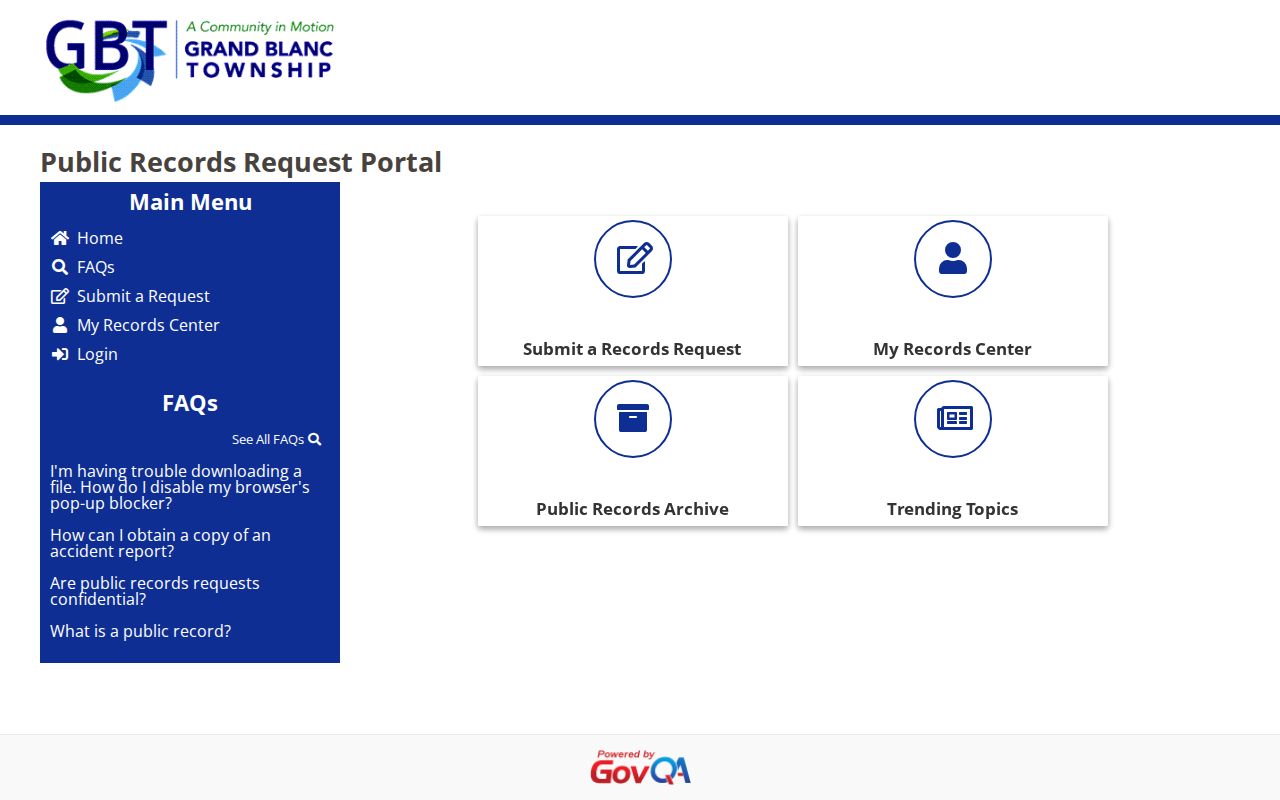
The portal gives a defined submission channel when a focused Grand Blanc Township record cannot be found in a public index.
Township FOIA forms and online-submittal links show the general request, denial-appeal, and fee-appeal choices.
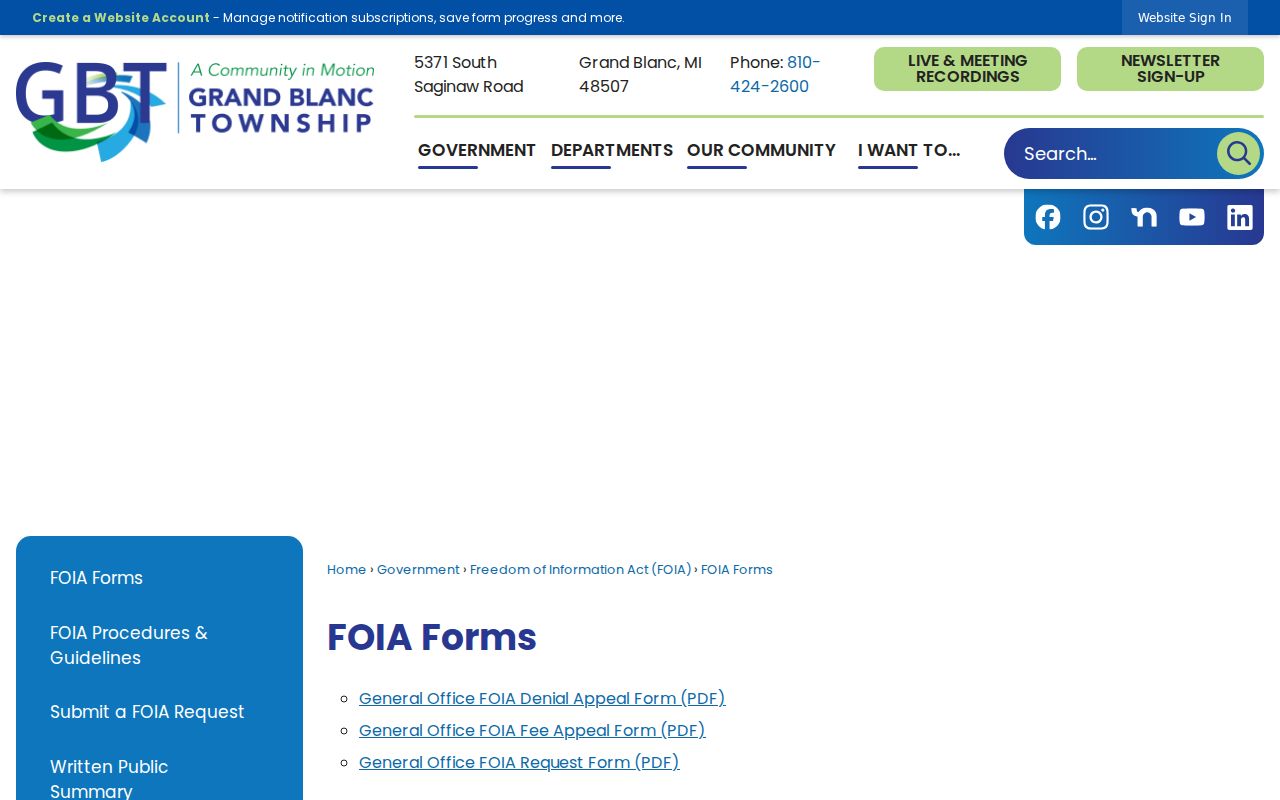
Use the form that matches the request or appeal, then keep a copy of the submitted scope and date.
Grand Blanc Township Historical Directories
Historical research is regional here. The Flint Public Library Local History and Genealogy collection describes Flint and surrounding communities from the 1890s to the present, with city and county directories, yearbooks, cemetery readings, newspapers, and a Genesee County Biography File. The Library of Michigan also provides a city-directory guide and print or microfilm access. Exact Grand Blanc-only directory runs were not located in the official sources, so search the surrounding Flint-area collections without claiming a continuous township series.
Directory years create snapshots between census years. Pair a surname entry with the same year's street section, then compare it to a deed, parcel, obituary, or census record. The full collection and reading method are on the Grand Blanc Township city directories page.
Grand Blanc Township Research Help
Some Grand Blanc Township questions need a local-history desk rather than another online search. Flint Public Library offers research help through its local-history and genealogy collection, and its staff research option is $25 in advance for about one hour. That service can check the sorts of sources that are not a single searchable township database: county histories, cemetery readings, school yearbooks, directories, local publications, organization histories, and obituary material. The Flint Genealogical Society also keeps its holdings in the library's genealogy section and provides volunteer assistance, including courthouse help.
Use that help for a defined historical question. Give the known spelling variants, street or township name, approximate year, and the record already checked. A librarian or volunteer can point to a likely shelf, archive, or record group, but a historical lead still needs to be compared with a custodian record where accuracy matters. This is especially useful because the official research did not locate one uninterrupted Grand Blanc-only printed directory run, a verified township renumbering year, or a Grand Blanc-specific Sanborn map series.
Grand Blanc Township Custody Sources
Custody-related sources answer narrow questions and should not be mixed with a residents directory. The official Genesee County Corrections Division page provides facilities information and an inmate-information number, but no public online roster was located in the research. A missing web result is not proof that no record exists. The documented fallback is the jail-information phone or a targeted request to the appropriate custodian.
The Genesee County Corrections page is a contact route for the jail-information process.
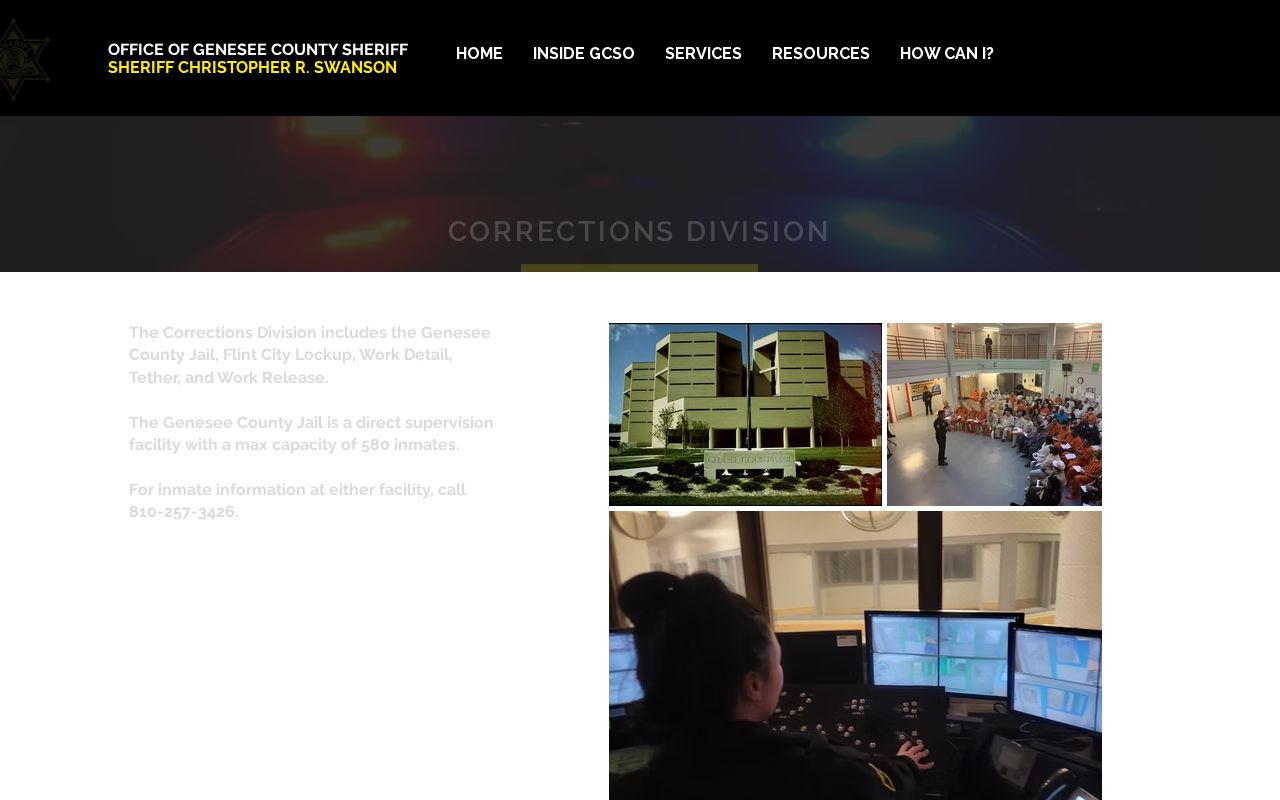
The corrections page is a contact route, not an online resident list or a complete statewide history source.
Michigan DOC OTIS, the state public registry, court records, and county-jail information each have separate coverage and limits. Compare the source's stated scope before drawing any conclusion from a result or a no-result.
Michigan State Police's public registry page describes its search modes and statutory publication limits.
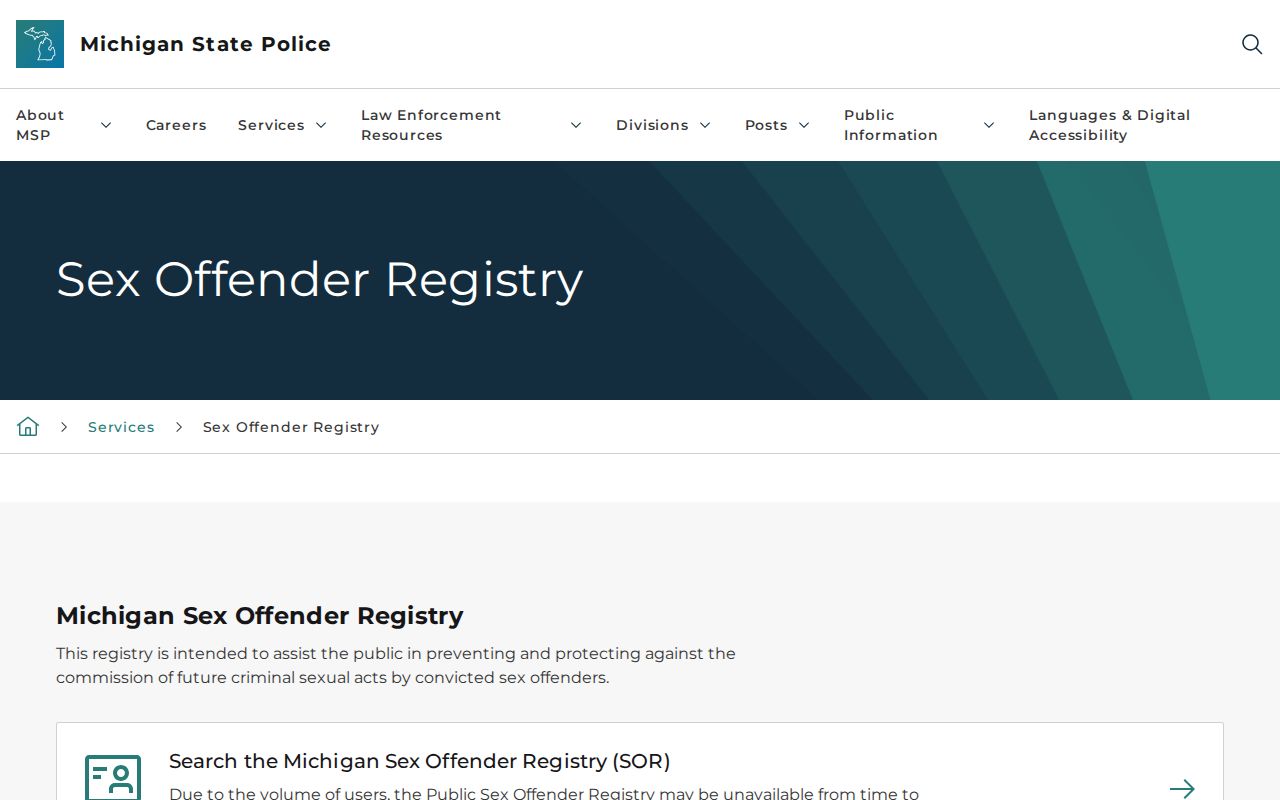
That registry has its own legal scope and must not be treated as a general Grand Blanc Township household directory.
Grand Blanc Township Safe Research
Public records support family history, estate work, reconnecting with people, consumer safety, and ordinary civic research. They do not make private household information public. Michigan's Address Confidentiality Program can provide qualifying people with a designated address and mail forwarding. Driver records, utility accounts, delivery information, protected voter fields, and restricted court or vital records have their own limits.
When a letter offers a costly copy of a public record, verify the charge through the county or township office first. The Michigan Attorney General advises residents to obtain government records directly from the government rather than responding to unsolicited record solicitations.
Note: A record is strongest when its custodian, date, and limited purpose are clear.